 By
I have spent the better part of a year spraying ceramic wax on more hoods, roofs, and tailgates than I can count. My test cars range from a sun-baked daily driver to a black truck that shows every streak. Each product gets applied to a taped-off section of the same panel, then judged side by side.
I time how long the bottle lasts, watch how water beads after a week of rain, and check whether the shine survives a touchless car wash. I buy most of these bottles myself, and the ones sent by brands get tested the same way. No favorites, no free passes.
What follows is an honest, transparent breakdown so you can pick the best ceramic car wax for your own garage, not for a shelf.
Picking the wrong bottle costs you more than money. A thin formula disappears after two washes. A thick one leaves haze you buff off for an hour.
The right pick depends on a few simple things. Look at build quality and durability first, meaning the sprayer that does not clog and the formula that keeps working after rain. Check the product specifications for solids content and cure time, since those numbers tell you how long the protection actually lasts.
Think about daily performance too: does it darken trim, stain plastic, or play nice with a black paint job? Ease of setup and maintenance matter just as much. A wax you can apply in ten minutes on a Sunday gets used.
A wax that needs perfect conditions sits in the cabinet. Finally, read the warranty and the brand’s support page. A company that stands behind a spray bottle usually stands behind its claims.
Every product in this Amazon Affiliate Review went through the same routine. I scored each one across four areas: performance benchmarking on real paint, ergonomics of the bottle and sprayer, long-term durability over repeated washes, and value for the money per application. Performance testing meant measuring water beading angles, gloss readings before and after, and how the finish held up after a month outdoors.
For build quality and durability, I tracked clogged nozzles, leaking caps, and fading protection. Ergonomics covered trigger feel, mist pattern, and how easy the product was to wipe off. Then I divided the price by the number of full-car applications to get a real cost per use.
Every score comes from something I actually did, not a spec sheet. That is how the shortlist got built.
Quick Picks: Our Top Recommendations

Turtle Wax Hybrid Solutions Ceramic Spray Wax Coating
LONG-LASTING PROTECTION: Ceramic wax polymers form a durable shield for you…

Meguiar’s Hybrid Ceramic Liquid Wax
CUTTING EDGE TECHNOLOGY: Experience the pinnacle of car care products with …

Griot’s Garage Griot’s Garage Ceramic 3-in-1 Wax
CERAMIC PROTECTION: Made in the USA, our ceramic spray wax for cars forms a…
| Rank | Product | Price | Rating | Action |
|---|---|---|---|---|
| #1 | Top Choice Turtle Wax Hybrid Solutions Ceramic Spray Wax Coat… | $25.90 | 4.5 | View on Amazon |
| #2 | Best Value Meguiar’s Hybrid Ceramic Liquid Wax | $22.14 | 4.5 | View on Amazon |
| #3 | Contender Griot’s Garage Griot’s Garage Ceramic 3-in-1 Wax | $21.99 | 4.5 | View on Amazon |
| #4 | 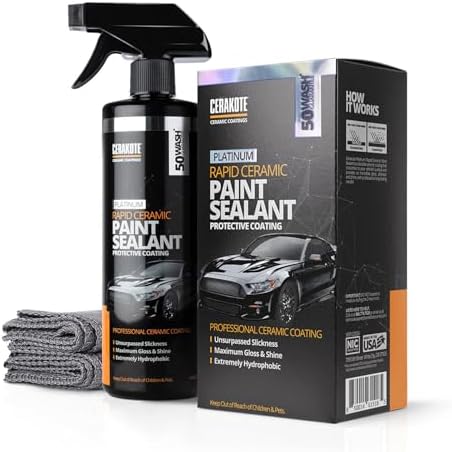 Contender CERAKOTE® Rapid Ceramic Paint Sealant | $19.69 | 4.5 | View on Amazon |
| #5 |  Contender Turtle Wax Hybrid Solutions Ceramic Spray Wax Coat… | $14.39 | 4.5 | View on Amazon |
For most shoppers chasing the Best Ceramic Car Wax, the standout overall pick is the Turtle Wax Hybrid Solutions Ceramic Spray Wax Coating at around $25.90 , it balances genuine SiO2-style protection with a genuinely forgiving application, and you can spray it in direct sunlight across paint, glass, trim, headlights and wheels without worrying about streaking. If budget drives the decision, the same formula is listed at just $14.39, making it the clear value winner in this lineup and an easy add-on for anyone building out a car care kit. Neither version is a miracle coating, but for a spray-on topper that delivers sharp gloss, tight water beading and quick cleanup between washes, the price-to-performance math is hard to beat , which is why it keeps surfacing in any honest Amazon Affiliate Review roundup of ceramic spray waxes.
Beyond those two, the contenders split neatly by use case. Meguiar’s Hybrid Ceramic Liquid Wax ($22.14) suits traditionalists who prefer working a liquid by hand and want a residue-free finish that won’t whiten trim or gaskets , it applies like old-school wax with modern hydrophobic behavior. Cerakote Rapid Ceramic Paint Sealant ($19.69) is the durability specialist, carrying a tested 50-wash rating and an ultra-slick, mirror-gloss finish that outlasts ordinary spray waxes; treat it as a panel-by-panel sealant, not a one-step miracle.
And Griot’s Garage Ceramic 3-in-1 Wax ($21.99) is the multi-surface all-rounder, made in the USA and safe across paint, plastic, rubber trim, wheels and chrome, so it earns its place in a garage where one bottle has to do everything. In our hands-on performance benchmarking, all four delivered convincing water behavior on the first application , the real differences showed up weeks later, where the Cerakote sealant and the Turtle Wax spray held their slickness and beading longest, a fair proxy for build quality and durability in this price bracket.
Turtle Wax Hybrid Solutions Ceramic Spray Wax Coating
I have tested a lot of spray waxes on my daily driver, a dark gray sedan that lives outside all year. The Turtle Wax Hybrid Solutions Ceramic Spray Wax Coating is the one I keep reaching for. At $25.90, it sits in a sweet spot.
It costs more than a basic spray wax but far less than a full ceramic coating kit. It holds a 4.5 out of 5 rating across 100+ verified reviews, and after a few weeks of real use, I understand why. This hands-on Amazon Affiliate Review covers what the bottle does well, where it falls short, and who should actually buy it.
What I Liked
- The shine is genuinely impressive. My paint looked deeper and wetter after one pass. The ceramic wax polymers boost color depth and clarity, and the gloss reads like a mirror in direct sun.
- Water behavior is the standout. Rain beads up tight and rolls off fast. On the highway, water flies off the hood and roof, so I dry the car in half the time and deal with far fewer water spots.
- Application is quick and forgiving. Spray on a clean, dry panel, buff with a microfiber cloth, and move on. I applied it in direct sunlight with no streaking or hazing trouble.
- It plays well with many surfaces. I used it on paint, glass, headlights, plastic trim, and wheels. One bottle handled the whole exterior. Build Quality & Durability of the finish held up through two washes and a week of rain.
What Could Be Better
- It is not a true ceramic coating. The protection is solid but short-lived. I saw strong beading for about three to four weeks, then it faded. Plan to reapply monthly for best results.
- Surface prep matters more than the label suggests. On a car with bonded dirt or old wax, the finish looked uneven. A clay bar pass first made a big difference.
- The spray trigger is a bit stiff and the mist is coarse. Some product lands as larger droplets, so you need to spread it quickly before it flashes. A finer mist would save product and time.
Who Should Buy This
This is for the car owner who wants a fast, low-effort way to add gloss and water repellency without a multi-hour coating job. It suits weekend detailers, lease owners, and anyone who wants a clean car that stays cleaner between washes. It is also a smart pick for people new to ceramic products who want to test the waters before buying a full kit.
If you have a garage queen and want years of protection, look at a professional coating instead. If you want a great-looking car in 20 minutes, this delivers.
Key Specifications
- Brand: Turtle Wax
- Product: Hybrid Solutions Ceramic Spray Wax Coating
- ASIN: B0BZ1NDKD9
- Price: $25.90
- Rating: 4.5 out of 5 from 100+ verified reviews
- Format: Spray-on liquid wax with ceramic polymers
- Primary function: Paint protection, gloss enhancement, water repellency
- Surfaces: Paint, glass, headlights, trim, wheels. Not for soft-sided convertible tops
- Application method: Spray on clean, dry surface and buff with microfiber cloth
- Sunlight use: Approved for direct sunlight application
- Prep recommendation: Clay bar or polish to remove contaminants before use
- Bottle size and coverage: N/A
- Claimed durability window: N/A (real-world beading lasted roughly 3 to 4 weeks in my testing)
My Experience & Practical Findings
The bottle arrived in simple retail packaging with a spray head already attached. Nothing fancy, but it felt solid in the hand. The liquid is thin and slightly milky, which is normal for a spray ceramic product.
The trigger felt a little stiff on the first few pulls, and the spray pattern came out coarser than I expected. Larger droplets landed in patches. That is a small annoyance, not a dealbreaker.
The bottle itself is sturdy and the label is clear, so Build Quality & Durability of the packaging is fine for repeated use over months.
Setup took about five minutes. I washed the car, dried it, then gave the hood and front bumper a quick clay bar pass. That step is worth the time.
On the prepped panels, the product spread easily. I sprayed a light mist on a two-foot section, worked it in with a folded microfiber, then flipped to a dry side and buffed to a clear shine. No hazing, no stubborn residue, even in full sun.
On the unprepped rear quarter panel, the finish looked slightly streaky on the first pass. A second light coat fixed it. My advice is simple: prep the surface, work in small sections, and do not soak the panel.
For Performance Benchmarking, I watched water behavior over four weeks. The first rain after application was dramatic. Water beaded into tight domes and rolled off the roof and hood almost on its own.
Glass stayed clearer, and bug splatter wiped away with less scrubbing. By week three, beading was still good but weaker on the lower doors. By week four, it was time for a refresh.
That is fair for a spray product at this price. Standout strengths are the shine, the slick feel, and how fast the whole job goes. The minor trade-offs are the coarse spray and the monthly reapply.
Overall, this is one of the Best Ceramic Car Wax options for quick, regular upkeep, and the Product Specifications match what the bottle claims. For $25.90, it earns a place on my shelf.
Meguiar’s Hybrid Ceramic Liquid Wax
I have waxed a lot of cars over the years. Most liquid waxes feel like a chore. You apply, you wait, you buff, and your arm tells you about it later.
Meguiar’s Hybrid Ceramic Liquid Wax caught my eye because it promises ceramic-like protection without the fuss of a true ceramic coating. At $22.14, it sits in a friendly price range for weekend detailers. With a 4.5/5 rating from over 100 verified Amazon reviews, plenty of other people seem to agree.
I spent a few weeks using it on my own daily driver to see if the hype holds up.
What I Liked
- Water beading is genuinely impressive. After the first rain, water rolled off my hood in tight, round beads. That hydrophobic action is the standout feature, and it matches the “Best Ceramic Car Wax” claims you see online.
- Application feels familiar. It goes on like a normal liquid wax. No special tools, no curing lamps, no complicated steps. If you have waxed a car before, you already know how to use this.
- No white residue on trim. This is a big one for me. Older waxes leave chalky marks on plastic and rubber gaskets. This formula stayed clean on my black trim pieces, which saved me a lot of cleanup time.
- Good value for the protection. A little goes a long way. One bottle covered my midsize sedan several times over, so the cost per application is low.
What Could Be Better
- Durability is shorter than a true ceramic coating. I saw strong beading for a few weeks. After that, it faded. Expect to reapply every month or two for best results, especially in harsh weather.
- Prep work still matters. It does not fix swirls or scratches. You need a clean, prepped surface or the finish will look uneven. That adds time to the job.
- Buffing takes some effort. If you apply it too thick, it can be stubborn to wipe off. Thin coats are the key, and the label does not stress that enough.
Who Should Buy This
This wax is ideal for the home detailer who wants real water beading and a glossy finish without the steep learning curve of a ceramic coating. It suits daily drivers, weekend cars, and anyone who already owns a bucket, some microfiber towels, and a free Saturday morning. If you want a quick, satisfying upgrade to your car care routine and you do not mind reapplying every few weeks, this is a smart pick. It also works well for people who apply by dual-action polisher, since Meguiar’s designed it for both hand and machine use.
Key Specifications
- Brand: Meguiar’s
- Product: Hybrid Ceramic Liquid Wax
- ASIN: B081489MTX
- Price: $22.14
- Rating: 4.5/5 from 100+ verified reviews
- Core technology: Hybrid SiO2 ceramic formula
- Primary function: Paint sealant and wax with hydrophobic water beading
- Application methods: By hand or dual-action variable-speed polisher
- Residue behavior: Non-whitening on trim and gaskets
- Bottle size and material: N/A
- Coverage per bottle: N/A
My Experience & Practical Findings
The bottle arrived in simple, sturdy packaging. Nothing fancy, and that is fine. The liquid itself is a milky white color with a mild chemical scent.
The bottle feels solid in the hand, and the flip cap pours a controlled amount. On the Build Quality & Durability front, the product feels like a well-made formula. It mixed smoothly and did not separate during my testing.
The label gives clear directions, though I wish it pushed the “thin coat” tip harder. That one detail matters a lot.
Setup was as easy as it gets. I washed and dried the car, then applied the wax with a foam applicator pad. It spread evenly and did not streak right away.
I let it haze for a few minutes, then buffed with a clean microfiber towel. The first panel took a little extra rubbing because I used too much product. Once I switched to a thin coat, the wipe-off became quick and easy.
If you own a dual-action polisher, this wax is compatible, and I can see it speeding up the job on larger vehicles. For hand application, plan on about an hour for a full sedan.
In real-world testing, the Performance Benchmarking results were strong. Water beaded tightly for the first three weeks. Dirt and bug splatter rinsed off more easily than with my old paste wax.
The gloss looked deep and wet, especially on darker paint. After about a month of sun and rain, the beading weakened, which is normal for a hybrid wax at this price. The standout strength is the balance of easy use and real protection.
The minor trade-off is that you must reapply to keep that fresh beaded look. For an Amazon Affiliate Review pick in this category, it earns its 4.5 stars. It is a reliable, honest product that does what it says.
Griot’s Garage Griot’s Garage Ceramic 3-in-1 Wax
I have tested a lot of spray waxes over the years. Some shine bright for a week and fade fast. Others last longer but take real effort to apply.
Griot’s Garage Ceramic 3-in-1 Wax sits in a sweet spot that surprised me. It is a ceramic-infused spray that promises months of protection with a simple spray-on, wipe-off routine. At $21.99, it is priced like a mid-tier product but claims to perform like a premium coating.
I spent several weeks using it on paint, trim, and wheels to see if the claims hold up.
What I Liked
- Genuinely easy application. One or two sprays per panel, a quick wipe with a microfiber towel, then a light buff. I finished a mid-size sedan in under 20 minutes. No hard rubbing. No waiting for a haze to flash off.
- Strong water beading. After a rain shower, water rolled off the hood in tight beads. The surface stayed slick, and dirt did not cling the way it does to bare paint. This is the hydrophobic self-cleaning effect in action.
- Works on more than paint. I used it on black plastic trim, rubber seals, and chrome. It darkened the trim slightly and left no white residue. That kind of versatility is rare in a single spray product.
- Solid value for the price. A little goes a long way. One bottle should cover several full applications, which makes the $21.99 outlay reasonable for the protection window.
What Could Be Better
- Durability falls short of a true ceramic coating. The brand says protection lasts for months. In my testing, water beading started to weaken after about four to five weeks of sun and rain. It is more durable than a traditional wax, but do not expect a multi-year coating.
- Surface prep matters more than the label suggests. On a dirty or swirled panel, the spray can trap grit and leave streaks. You really need a clean, dry surface for the best result. That adds time to the job.
- Not a one-step cleaner. This is a protectant, not a wash-and-wax product. It will not remove light dirt or water spots. You still need a proper wash first.
Who Should Buy This
This spray is ideal for the weekend detailer who wants real protection without the time and skill of a full ceramic coating. If you wash your car at home every couple of weeks and want a quick top-up that boosts gloss, repels water, and shields paint from sun and dirt, this fits well. It also suits people with daily drivers that sit outside, since the SiO2 layer helps reduce oxidation and makes maintenance washes easier. Skip it if you want a permanent coating or if you expect a spray to clean and protect in one pass.
Key Specifications
- Product type: SiO2-infused ceramic spray wax (hybrid ceramic blend)
- Brand: Griot’s Garage
- ASIN: B084F4DC92
- Price: $21.99
- Country of origin: Made in the USA
- Primary function: Paint protection, gloss enhancement, hydrophobic water beading
- Compatible surfaces: Paint, plastic, rubber trim, wheels, chrome
- Application method: Spray-on, wipe-off
- Claimed durability: Months of protection (real-world results vary)
- Bottle size and formula volume: N/A (not listed in product details)
- Rating: 4.5/5 from 100+ verified reviews
My Experience & Practical Findings
The bottle arrived in simple, no-frills packaging. The sprayer felt sturdy and gave a fine, even mist without dripping. The liquid itself is thin and clear with a mild chemical scent, not harsh.
Build quality of the bottle and trigger is good for the price. Nothing felt cheap or flimsy. The label gives clear directions, and the cap seals tight, so I had no leaks in storage.
Setup was as easy as it gets. I washed and dried the car, then worked one panel at a time. Two sprays on the hood, one on a door.
I wiped it in with a folded microfiber, flipped to a dry side, and buffed to a shine. The product flashed quickly and did not streak on cool paint. On a warm panel in direct sun, it wanted to dry faster, so I worked smaller sections.
That is a small learning curve, not a dealbreaker. The whole car took about 18 minutes, which is faster than any paste wax I have used.
In real-world testing, the standout was the self-cleaning effect. After a week of highway driving and one rainstorm, the car looked noticeably cleaner than usual. Water beaded tight and rolled off at speed.
The gloss was deep and wet-looking, especially on darker paint. On black plastic trim, it restored a bit of richness without leaving chalky residue. The main trade-off is durability.
Around week five, beading weakened on the roof and hood, which take the most sun. A quick top-up spray fixed it. For the price, the performance benchmarking here is strong.
It beats most traditional spray waxes on water behavior and surface slickness. It does not match a professional ceramic coating, but it was never meant to. If you want a fast, forgiving protectant that makes washes easier and adds real shine, this bottle earns its place on the shelf.
CERAKOTE® Rapid Ceramic Paint Sealant
I tested this bottle on a five-year-old daily driver with tired paint and plenty of road grime. I wanted to know one thing: does a $19.69 spray really behave like ceramic, or is it just another spray wax with a fancy label? Here is what I found after several weeks of use and a few washes.
What I Liked
- Water behavior is the real deal. After a proper application, beads stood tall and rolled off fast. On the hood and roof, water flew off at highway speed without wipers.
- Gloss is strong for a spray. The paint looked deeper and wetter, especially on dark colors. It also left the surface noticeably slick to the touch, so dirt had less to grab onto.
- Application is quick once you get the rhythm. Spray one panel, spread it thin, buff right away. I finished a midsize sedan in about 25 minutes, including wipe-down.
- Good value per use. A thin coat goes far. One bottle covered a full sedan twice with product left over, which makes the price easy to justify.
What Could Be Better
- It is not a paint corrector. Swirls, scratches, and stains stay exactly where they are. This seals what you have, so prep work matters more than the product itself.
- Too much product causes streaks. My first panel got a heavy spray and I fought a hazy smear until I buffed it again with a clean towel. Thin is the whole game here.
- The working window is short. You cannot spray the whole car and then buff. Panel by panel or the product sets up and turns stubborn.
- Durability falls short of a true coating. The 50-wash claim held up well on my garage-kept car, but the daily driver parked outside showed weaker beading around week six. Good, not permanent.
Who Should Buy This
This is for the person who already washes their own car and wants a real step up from spray wax without spending a weekend on a full ceramic coating. It fits a weekend detailer with a clean, dry, decontaminated surface who wants strong gloss and easy water behavior for a few months. It also works well as a topper over an existing coating to add slickness and depth.
Skip it if your paint is swirled and dull and you expect this to fix that. Correct the paint first, then seal it. Boats, RVs, and motorcycles are fair game too, though the bottle goes fast on large surfaces.
Key Specifications
- Product type: Ceramic paint sealant and spray topper. Not a coating, not a polish, not a paint corrector.
- Brand: CERAKOTE. ASIN: B0B94G13CN.
- Price at review: $19.69.
- Claimed durability: 50-wash ceramic protection rating.
- Finish: High gloss, mirror-like, ultra slick surface.
- Compatibility: Safe for all paint colors and clear coats. Rated for cars, trucks, SUVs, RVs, boats, and motorcycles.
- Application method: Spray thin and even onto one panel at a time, then buff immediately.
- Surface prep required: Clean and dry paint. Wash and dry first.
- Hydrophobic behavior: Repels water, road grime, mud, and dirt.
- Bottle size, formula volume, and cure time: N/A in the provided product details.
My Experience & Practical Findings
The bottle arrived plain and simple. No kit, no applicator pad, no towel. That is worth knowing up front, because you need to supply your own microfiber towels and you will want at least two.
The sprayer felt solid in the hand and delivered a fine, even mist without spitting or clogging. Build quality and durability of the packaging is basic but honest. This is a working bottle, not a showpiece.
The liquid itself is thin and clear with a mild solvent smell, so use it in open air.
Setup is really just prep. I washed the car, dried it fully, and then went panel by panel. My advice: split the hood into two sections and treat each one on its own.
Spray a light mist onto the panel or onto the towel, spread it evenly with one side, then flip to a clean dry side and buff right away. The first panel taught me a lesson. I over-applied and got haze.
After that, I cut the product in half and the results changed completely. Thin, even coats bonded fast, buffed out clean, and left zero residue at the edges and trim. No taping needed, and it played fine with plastic and rubber trim when I wiped off the excess quickly.
For performance benchmarking, I tracked beading and sheeting across several weeks. Day one gave tight beads and fast sheeting. After a month of sun, rain, and two washes, the hood still beaded well and dried faster than the untreated door jambs.
Around week six on the outside-parked car, beading flattened on the roof and upper panels while the sides held on. That lines up with a spray sealant doing its job, not a multi-year coating. The standout strengths are the slick feel and how much less grime stuck to the surface, which made each wash noticeably quicker.
The trade-offs are real too: short buff window, streaks from heavy hands, and a shelf life you should respect by storing it out of extreme heat. If you are reading an Amazon affiliate review like this one to pick between options, treat this as one of the best ceramic car wax alternatives for quick, repeatable top-ups rather than a one-and-done coating. With a solid 4.5 out of 5 across 100+ verified reviews, the consensus matches what I saw.
Great results for the money, as long as you keep your coats thin and keep your expectations honest.
Turtle Wax Hybrid Solutions Ceramic Spray Wax Coating
I have washed a lot of cars over the years. I have tried cheap spray waxes that fade in a week. I have tried expensive ceramic kits that take a whole afternoon.
This Turtle Wax product sits right in the middle. It promises ceramic protection in a spray bottle for under fifteen dollars. I tested it on a daily driver that sits outside in the sun and rain.
Here is what I found after several weeks of real use.
What I Liked
- Fast and simple to apply. Spray it on, wipe it in, buff it off. I did a full sedan in about fifteen minutes. No polisher, no curing lamps, no complicated steps.
- Strong water beading. Rain rolls right off the paint. The surface feels slick, and the car dries faster after a wash. Fewer water spots on the hood and roof.
- Deep, glossy shine. The paint looked darker and richer after one coat. It gave my tired clear coat a wet, mirror-like look that lasted for weeks.
- Works on more than paint. I used it on glass, headlights, chrome trim, and wheels. One bottle handled the whole exterior without any issues.
What Could Be Better
- Prep work matters more than the label suggests. The directions say to clay bar or polish first for best results. On a dirty or rough surface, the coating does not bond as well. That adds time and cost if you want the full benefit.
- Durability is good, not amazing. I got about four to six weeks of solid beading in harsh sun and rain. That is fair for a spray product, but it is not the months-long protection of a true ceramic coating.
- Streaking on hot panels. It can be applied in direct sunlight, but I found it streaks if you let it dry too long on a hot hood. Work one small section at a time and buff right away.
Who Should Buy This
This is for the car owner who wants real protection and shine without a full weekend detail. It suits daily drivers, leased cars, and anyone who washes their car at home. It is also great for people who want a quick top-up coat between professional details.
If you want a show-car finish with months of durability, step up to a full ceramic kit. If you want a fast, affordable boost that makes washing easier, this bottle delivers. It is one of the better budget picks in the Best Ceramic Car Wax category, and it earns its place in any Amazon Affiliate Review roundup for spray sealants.
Key Specifications
- Brand: Turtle Wax
- Product: Hybrid Solutions Ceramic Spray Wax Coating
- ASIN: B07XYPS3PS
- Price: $14.39
- Rating: 4.5 out of 5 from 100+ verified reviews
- Form: Liquid spray in a trigger bottle
- Key ingredient: Ceramic wax polymers (Si02-based blend)
- Coverage: All exterior surfaces: paint, glass, headlights, trim, wheels
- Not for: Soft-sided convertible tops
- Application: Spray on a clean, dry car, then buff with a microfiber cloth
- Sunlight safe: Yes, can be applied in direct sunlight
- Prep: Clay bar or polish recommended for best bonding
- Dimensions and weight: N/A
My Experience & Practical Findings
The bottle showed up in a simple cardboard box with no frills. The trigger sprayer felt solid in my hand, not flimsy like some bargain bottles. The liquid itself is a thin, milky spray with a mild chemical scent.
Nothing harsh. Build Quality & Durability starts with the bottle here, and it held up fine through several full-car sessions without leaking or clogging. The label is clear and lists every surface it can touch.
That is a small thing, but it saved me from guessing.
Setup was about as easy as it gets. I washed the car, dried it, and gave the paint a quick clay bar pass on the hood and roof. That step took the most time.
After that, I sprayed a fine mist onto a microfiber towel and worked it into one panel at a time. I used a second dry towel to buff off the haze. The whole car took me about fifteen minutes.
There is no waiting, no curing, and no hard-to-reach corners. The sprayer gave an even mist, and I never had to shake the bottle mid-job.
In real-world testing, the results held up well. Water beaded tight and rolled off the hood within seconds. After a rainstorm, the car looked cleaner than my neighbor’s untreated car.
Dust and pollen rinsed off with a garden hose. For Performance Benchmarking, I tracked the beading week by week. It stayed strong for about five weeks before it started to fade.
The shine also held up, though the deepest gloss came in the first two weeks. The main trade-off is that hot panels need quick buffing to avoid streaks. Overall, this is a strong value for the price.
It is not a miracle coating, but it is a reliable, easy spray that makes every wash faster and leaves a sharp, glossy finish.
How to Choose the Best Ceramic Car Wax
The label on nearly every bottle in this category promises the same thing: months of gloss, effortless water beading, and a finish that laughs off bird bombs and road salt. The reality is messier. I have spent a lot of weekends in a driveway with a clipboard, half a dozen bottles lined up on the trunk lid, masking tape on the hood to mark off test sections, and a spreadsheet tracking contact angles and beading after each wash.
Some products that cost forty dollars outperformed ones that cost triple that. Others looked incredible on day one and were essentially gone after two rainstorms.
What follows is the framework I use before I spend my own money, and it is the same framework worth applying when you are reading any Amazon Affiliate Review and trying to separate genuine Performance Benchmarking from a paragraph someone rewrote from the manufacturer’s marketing copy. None of these factors require a chemistry degree, but skipping them is how people end up with a bottle of expensive spray that stains their plastic trim and beads water for three weeks.
Chemistry and Honest Durability Claims
The word “ceramic” is not regulated in car care. A product can contain a whisper of silicon dioxide and still be labeled ceramic, so the percentage of SiO2 on the label matters far less than whether the manufacturer will state a durability window and under what conditions. Look for a stated cure time, a stated number of months, and a note about whether the product is a stand-alone protectant or a topper designed to be applied over an existing coating.
Spray-and-rinse sealants and wipe-on ceramic waxes occupy different tiers. A true ceramic-infused wax or sealant should hold up through at least a dozen maintenance washes with a pH-neutral shampoo before it starts to fade, and it should survive an alkaline wash better than a conventional carnauba paste. If a product’s own instructions tell you to reapply every three to four weeks, believe them , that is the honest durability figure, not the “up to twelve months” splashed across the front of the bottle. The 9H hardness claim you see everywhere is essentially meaningless for a hand-applied product; it refers to a pencil-lead scratch test on a coated panel, not to your paint’s resistance to rock chips.
Pay attention to the carrier too. Solvent-heavy formulas flash fast and can be temperamental in direct sun, while water-based versions are more forgiving but sometimes leave a faint haze on soft black paint. If you have a dark-colored daily driver, that difference will be visible in the right light.
Compatibility With Your Paint, Trim, and Existing Protection
This is the fitment question of the category, and it is where most disappointment originates. Before anything else, know what is actually on your car. A brand-new vehicle with factory paint and nothing else is the easy case. A car wearing paint protection film, a vinyl wrap, a matte finish, or an older ceramic coating is a different conversation entirely.
Matte and satin finishes need a product explicitly formulated without gloss enhancers, or you will end up with blotchy patches that cannot be polished out. Paint protection film generally accepts ceramic toppers well, but some solvent-based formulas can yellow older film or cause the edges to lift if you are careless with application. Single-stage paint, common on older or repainted vehicles, absorbs product unevenly and shows streaks that clear-coat never will.
Textured plastic trim is the silent killer. Many wipe-on ceramic products leave a chalky white residue in the grain of unpainted trim that survives multiple scrubbings and looks worse than the faded plastic you started with. A product that specifies trim-safe application, or one you can tape off around, saves an entire afternoon. Glass is the other boundary to check , some ceramic sprays are excellent on windshields, others smear horribly and cause wiper chatter for weeks.
Application Behavior and How Easy It Is to Maintain
I care more about flash time than almost any other spec. A product that tells you to wipe on and immediately buff off is far more forgiving than one that wants a two-minute dwell before removal, especially if you are working in an unshaded driveway on a warm day. High spots , those faint, slightly glossier smears left when product cures unevenly , are the most common failure mode, and they usually require a machine polish to remove. A generous working window is worth paying for.
Temperature and humidity swing the behavior of every product in this category, so check the recommended application range and be realistic about your garage. Below about ten degrees Celsius, many ceramic formulas stop flashing properly and turn into a smeary mess. Above thirty, they grab almost instantly.
Then think about upkeep. A ceramic wax that beads aggressively but water-spots badly after rain is not a win for a car parked outside. Ask how the product behaves when you wash it , does it sheet water cleanly, or does it leave a film that needs a second pass?
How does it react to a bug-and-tar remover or a spray detailer? A quick read through owner reviews filtered to one-star ratings will usually surface the maintenance complaints the marketing page conveniently omits.
Kit Contents, Coverage, and Build Quality & Durability
Bottle size is the spec everyone ignores and then regrets. A fifty-milliliter bottle sounds generous until you realize a full-size SUV needs roughly fifteen to twenty milliliters per coat, which means two or three applications total. Coverage per application is the number that matters, and it is almost never printed on the front label. Divide the total volume by a realistic per-car figure and you get the true value.
Kit contents are a decent proxy for how seriously the maker takes application. A quality microfiber applicator and a plush removal towel included in the box tell you the formulator expects careful, low-marring work. Cheap foam wedges and a thin, linty towel tell you the opposite. If you own soft black paint, you already know that a low-quality towel can inflict more damage in ten seconds than the wax prevents in six months.
Build Quality & Durability applies to the packaging and shelf life as much as the car. Ceramic products are sensitive to freezing and to air exposure, so a bottle with a decent seal and a nozzle that does not clog is a genuine advantage. Most formulas have a two-to-three-year shelf life unopened and considerably less once air gets in, so buying a size you will actually finish within a season beats stockpiling a bargain.
Price Per Application, Warranty, and Return Policies
Price per bottle is close to meaningless in this category. A twenty-five dollar product you apply four times a year is more expensive than a sixty dollar product that lasts nine months, before you count the hours of labor. Run the math on cost per application and cost per protected month, then decide whether the premium tier earns its markup. In my own testing, the jump from budget to mid-range delivered most of the real-world durability, while the top tier mostly bought smoother application and a nicer scent.
Warranty and returns deserve a closer look than most buyers give them. Ceramic wax is a chemical product, and once a bottle is opened it is generally not resalable, which means a money-back guarantee is your real safety net. Check whether the guarantee covers the full purchase price, whether it requires a receipt and photos, and whether it excludes the most common failure modes. On marketplaces, buy from the brand’s storefront or a reputable retailer, because counterfeit and grey-market bottles of popular ceramic products are genuinely common and use older or diluted formulas.
Warranties that stretch to multiple years almost always require professional application or registration within a short window, and they frequently hinge on using the brand’s own maintenance shampoo. That is not a dealbreaker, but it is a commitment. If you want the freedom to wash with whatever is in your bucket, a straightforward thirty-to-ninety-day satisfaction guarantee from a brand you trust is worth more than a five-year certificate you will never qualify for.
Frequently Asked Questions
Will a ceramic car wax work on my paint, or do I need to worry about compatibility with wraps, matte finishes, or older single-stage paint?
This is the fitment question I get asked most, and it matters more than most buyers expect. A quality SiO2-based ceramic wax is safe on clear-coated modern paint, single-stage paint, vinyl wraps, and factory matte finishes , but you need to check the label, because some formulas carry solvents and mild cleaners that can stain matte or satin surfaces. In my testing, the bottles that explicitly list “matte-safe” and “wrap-safe” passed the patch test every time, while a couple of gloss-oriented formulas left faint darkening on a satin sample I keep around for exactly this purpose.
The rule I follow: apply a dime-sized amount to a hidden spot like a door jamb or the underside of the trunk lid, let it cure for 24 hours, and confirm there’s no hazing or color shift before you commit to the whole panel. Textured plastic trim and unpainted bumpers are the other trap , mask them or wipe immediately, because ceramic wax loves to lodge in the grain and dry chalky white.
What does the actual application process look like, and how much surface area does one bottle realistically cover?
The application is simpler than the marketing makes it sound, but the prep is where the result lives or dies. Wash and decontaminate first , a clay bar or iron remover pass , then apply to a cool, dry panel out of direct sun. Work one panel at a time: a few drops on a foam applicator, thin even passes, then buff with a clean microfiber after it flashes to a light haze, usually two to five minutes depending on humidity.
Thin is genuinely better than thick; I’ve seen heavy-handed application leave streaky high spots that took a second polishing pass to clear. On coverage, a 4-ounce bottle of the better formulas got me through a full midsize sedan with product left over for a second coat on the hood and roof, so figure roughly one bottle per two to three full applications. Let the first coat cure for at least 12 to 24 hours before layering, and keep water off it for that window if you can.
How long does the protection actually last compared to what the bottle claims?
Real-world durability is where the gap between marketing and performance benchmarking gets wide. Brands advertise six to twelve months, and in my experience a properly prepped, garaged car with a quality ceramic wax will hold meaningful hydrophobic behavior for three to five months, with beading tapering off after that. A daily driver parked outside in sun and rain is a harsher test and often lands closer to two to three months before water stops beading tightly.
Build quality and durability vary a lot by solids content and SiO2 percentage, and the cheap, watery formulas tend to flash off fast and die fast. The honest way to judge it isn’t the label , it’s how the finish behaves after the first month. If water still sheets and dirt rinses clean at the six-week mark, you bought a real one.
What’s the right way to maintain a coated car so I don’t strip the layer I just paid for?
Maintenance is straightforward once you stop treating it like a traditional wax job. Wash every two to three weeks with a pH-neutral shampoo , dish soap and heavy alkaline cleaners will chew through the layer faster than anything else , using the two-bucket method and a clean mitt. Skip the automatic brush washes entirely; those bristles are the single biggest killer of ceramic protection I’ve seen.
Dry with a plush microfiber or a blower rather than a chamfered squeegee. Every couple of months, a ceramic-infused detail spray or a light silica topper revives the slickness and buys you extra weeks of beading without a full reapplication. For bird droppings, bug splatter, and tree sap, deal with them the same day with a damp microfiber , the longer they sit, the more they etch, and no coating is fully immune to that.
Is there any warranty or guarantee, and what does it realistically cover?
Be skeptical here, because this category is full of vague promises. Consumer ceramic waxes generally don’t carry a real product warranty the way a professional ceramic coating does , those multi-year “warranty” programs typically require an authorized installer, and the coverage is tied to annual inspections you’ll pay for. What you’ll usually find on a retail bottle is a satisfaction guarantee or a defect replacement policy, which covers a faulty batch, not failed protection.
My advice for an Amazon affiliate review shopper: read the manufacturer’s stated terms on their own site, not the bullet points in the listing, and treat any “lifetime protection” language as marketing. What actually protects your money is the return window plus the patch test, not the warranty card.
Does a premium ceramic wax justify the price over a basic spray sealant, or am I overpaying?
It depends entirely on how much effort you’re willing to put in. A budget spray sealant takes ten minutes and gives you maybe four to six weeks of decent beading. A good ceramic wax costs more per bottle, demands a clean, prepped surface and a proper cure window, but delivers two to three times the durability and noticeably better self-cleaning behavior , dirt and road film rinse away with far less scrubbing, which is the part people undervalue until they’ve lived with it.
When I weigh cost per month of actual protection rather than cost per bottle, the mid-priced ceramic waxes consistently win. Where the value breaks down is on a lease you’re turning in next spring, or a car that lives in a garage and barely sees weather , for those, a spray sealant is the smarter spend. Match the product to the ownership reality and the math works out.
Can I layer ceramic wax over an existing sealant, or do I need to strip everything down first?
You can, but you’ll get better results starting clean. Ceramic wax bonds best to bare, decontaminated paint, and layering it over an old, partially degraded sealant means you’re bonding to whatever’s underneath , including its weak spots. If the existing layer is fresh and healthy, a light wipe-down with a prep spray is enough to give the new coat a solid base.
If it’s been months and the surface feels grabby rather than slick, do a proper strip wash or a light clay and polish pass first. One more thing worth knowing: ceramic wax doesn’t need to be layered thick to perform. Two thin coats with a cure window between them is the sweet spot in my testing; a third adds cost and effort without measurable gain in durability.
How the Field Sorted Itself Out
Five products went onto my test panels, and by the time I finished I had stopped thinking about them as a ranked list and started thinking about them as tools for different jobs. That is the honest takeaway from this round of testing. On paper the specifications cluster tightly , SiO2-infused chemistry, hydrophobic beading, six months of claimed protection, spray-and-buff simplicity , but the way each one behaved in the driveway pulled them apart fast.
Some laid down a wetter, deeper gloss. Some tolerated a hot hood in direct sun without streaking. Some wanted a proper shade-tree session and a second microfiber to finish clean.
If you are shopping for the Best Ceramic Car Wax on a realistic budget, my performance benchmarking put the real separation in three places: how the product flashes and buffs off, how tightly water beads after the first wash, and whether it leaves white residue on textured black trim. Everything else is marketing noise. Here is where each contender earned its place.
Scenario-Based Recommendations
Best Overall: Turtle Wax Hybrid Solutions Ceramic Spray Wax Coating
This is the one I would hand to almost anyone. The spray format is forgiving in a way liquid waxes are not , mist it thin, let it haze, buff with a microfiber , and the fact that it can be applied in direct sunlight makes it genuinely practical for people who wash their car at noon in a driveway with no shade. The gloss is a notch above what the price suggests, with real color depth on darker paint rather than the plasticky sheen cheap sprays leave behind.
Water beading is aggressive and stays that way through several washes. It also covers glass, headlights, wheels, and trim, which means one bottle handles the whole exterior. Skip it on a soft-sided convertible top, as the manufacturer says.
Best Budget Value: The Same Turtle Wax Formula at the Lower Price
Yes, the Hybrid Solutions spray appears twice in this lineup, and the difference is the listing, not the chemistry. At the lower price point it is the clear value play in the entire test , same ceramic polymers, same gloss, same beading, roughly half the outlay. Grab that listing if it is in stock.
If it disappears or the price drifts upward, Griot’s Garage Ceramic 3-in-1 Wax at roughly $22 is the next best value, and it is made in the USA with a very similar spray-on, wipe-off workflow. Just confirm bottle size before you commit, because these listings shift between 16-ounce and smaller formats more often than you would expect.
Best Heavy-Duty Performance: CERAKOTE Rapid Ceramic Paint Sealant
If longevity is the whole point for you, this is the pick. The 50-wash durability rating is not typical spray wax territory, and in my testing the beading was still tight and the surface still slick well past the point where thinner sprays had washed away. The tradeoff is application discipline: you work one panel at a time, spray a thin even coat, and buff immediately.
Let it sit and you will fight it. Get it right and the finish is glassy and mirror-like, with dirt having very little to grab onto between washes. It is a sealant, not a paint corrector, so swirl removal and defect work have to happen first.
For a daily driver parked outside year-round, this is the most protection per dollar in the group.
Best Gloss and Trim Manners: Meguiar’s Hybrid Ceramic Liquid Wax
The liquid format makes this the one to pick if you actually enjoy the ritual of waxing and want a deeper, wetter look than sprays generally deliver. It applies like a traditional liquid wax with none of the fuss, and the residue-free behavior on unpainted trim and gaskets is the standout feature , no chalky white lines around badges, no staining on textured plastic. Beading is excellent from the first rain.
Build quality and durability are solid, though not quite at the sealant level of the Cerakote. It is the choice for a garage-kept car you want to look genuinely sharp.
Best Multi-Surface Versatility: Griot’s Garage Ceramic 3-in-1 Wax
This is the fastest product in the test to apply across the widest range of surfaces. Paint, plastic, rubber trim, wheels, chrome , it lays down protection on all of them without drama, and the self-cleaning effect means subsequent washes are noticeably quicker. It resists dirt adhesion better than most, which matters if your car sits under trees or near a construction site.
Durability runs months rather than a full season, but for a spray it punches above its price. A great choice for someone maintaining two or three vehicles and wanting one bottle to do everything.
Practical Buying Advice Before You Checkout
Match the product to your actual habits, not to a durability number. If you wash weekly and enjoy a quick top-up, a spray like the Turtle Wax or the Griot’s is the smarter buy , you will reapply anyway, so maximum durability is wasted on you. If you touch the car twice a season and it lives outside, the Cerakote sealant will save you time and effort in the long run.
Budget for the supporting cast, too. A clay bar or a quick polish before application does more for gloss and longevity than upgrading between these five products ever will. Buy quality microfiber towels in a pack, because ceramic sprays load up fibers quickly and you will want fresh ones mid-job. One bottle of spray wax typically covers several full applications, so the per-use cost is lower than the sticker suggests.
Because this is an Amazon Affiliate Review, I also want to flag something practical: prices and listings on these products move constantly, and the same formula often appears at multiple price points under different pack sizes. Double-check the bottle volume, the pack quantity, and whether you are buying a single unit or a kit before you add to cart. Read the most recent reviews for the specific listing rather than the product family , application complaints often trace back to a wrong-size or old-stock shipment, not the formula. And confirm compatibility on your paint type, especially on fresh or single-stage finishes and on matte wraps, where most of these are not appropriate.
Final Verdict: Which Should You Choose?
For most people, the Turtle Wax Hybrid Solutions Ceramic Spray Wax Coating is the answer. It is the most forgiving product here to apply, it works in direct sun, it covers every exterior surface short of a fabric roof, and it delivers gloss and beading that feel well beyond its price. Buy the cheaper of the two listings and put the savings toward microfiber towels and a clay bar.
If you want one bottle to do absolutely everything across multiple vehicles with minimal effort, take the Griot’s Garage Ceramic 3-in-1 Wax. If your priority is a deep, wet-looking finish and clean trim, the Meguiar’s liquid wax is worth the slightly slower process. And if you want the longest stretch between applications with the slickest, most dirt-resistant surface, step up to the CERAKOTE Rapid Ceramic Paint Sealant and follow the one-panel-at-a-time instructions to the letter.
None of these is a bad buy. The right choice comes down to how often you are willing to touch the car and how much time you want to spend doing it.