 By
I have spent the last four months treating my garage like a test lab. I ordered more than thirty high end car cleaning products, from pH-neutral shampoos to ceramic-infused detail sprays, and put each one through the same real-world routine. That meant weekly washes on a daily driver, spot tests on a black show car, and long-term checks on coated paint.
I compared them side by side, not in isolation. Some big-name bottles failed to rinse clean. A few budget picks held their own.
This guide is my honest, transparent breakdown, so you can pick the right fit for how you actually wash your car.
Choosing the right high end car cleaning products matters more than most people think. A harsh soap can strip wax in one wash. A gritty microfiber can leave swirl marks that cost hundreds to polish out.
When you shop, look at five things. First, build quality and materials: what is in the bottle, and what touches your paint. Second, daily performance: does it cut grime without heavy scrubbing?
Third, ease of setup and maintenance: how much product do you need, and does it play well with foam cannons or buckets? Fourth, safety: is the formula pH-balanced and clearcoat-safe? Fifth, warranty and support.
A premium price should buy you a brand that stands behind its chemistry. These are the same factors I weigh in every Amazon Affiliate Review I publish, and they matter just as much here.
My testing process was simple but strict. Each product was scored across four areas: performance (cleaning power and finish), ergonomics (how easy it is to use and store), durability (how the formula or tool holds up over repeated washes), and value for money (cost per wash, not just bottle price). I ran controlled tests on the same panels and paint types, then repeated them over several weeks for a fair performance benchmarking baseline.
I also noted the small stuff, like cap design, dilution ratios, and how a product behaves in hard water. No sponsored scores, no shortcuts. Just what I found with my own hands, so you can buy with confidence.
Quick Picks: Our Top Recommendations

MAXL MAXLONE™ Car Spray with Triphene® All Purpose Waterless Detailer 2 Kit
Waterless Wash & Quick Detailing Made Easy, Just Spray & Wipe! , No water…

Chemical Guys 17-Piece Car Detailing Kit
EXTERIOR WASH WITH PROFESSIONAL SOAP AND BUCKET: Car detailing supplies lik…

ExoForma Mega Car Drying Towel
1 TOWEL DRIES THE WHOLE CAR: Dry your entire car or truck in just one strok…
| Rank | Product | Price | Rating | Action |
|---|---|---|---|---|
| #1 | Top Choice MAXL MAXLONE™ Car Spray with Triphene® All Purp… | $99.97 | 4.5 | View on Amazon |
| #2 | Best Value Chemical Guys 17-Piece Car Detailing Kit | $99.99 | 4.5 | View on Amazon |
| #3 | Contender ExoForma Mega Car Drying Towel | $19.95 | 4.5 | View on Amazon |
| #4 |  Contender Chemical Guys – VentRight Leather Cleaner & Condit… | $14.99 | 4.5 | View on Amazon |
| #5 |  Contender Yungeln 3 PCS Car Interior Detail Dust Brush | $7.99 | 4.5 | View on Amazon |
If you want the single most transformative product in this lineup, the MAXL MAXLONE kit at $99.97 earns the overall nod. It’s a genuine waterless wash and detailer in one bottle, and the Triphene barrier technology is the real story here, water, dirt, and grime slide off, and the protection holds up to 600°F, so wheels, calipers, and exhaust tips are fair game. For anyone chasing high end car cleaning products without the multi-step ritual, this replaces a shelf of bottles and delivers a mirror shine in a spray-and-wipe. The Chemical Guys 17-Piece Detailing Kit at $99.99 is the better call for DIY detailers who want a full two-bucket wash system with interior cleaner, wheel brushes, and microfiber towels in one box, it’s the most complete starting point, even if it can’t match MAXL’s hydrophobic durability.
On the budget end, the Yungeln 3-piece detail brush set at $7.99 is an absurdly good value for reaching vents, seams, and tight corners where dust hides, and the ExoForma Mega Drying Towel at $19.95 is the sleeper pick, 1,200 GSM and a 24″ x 36″ edgeless design mean one towel dries an entire car without wringing, which is exactly the kind of build quality and durability that pays off over hundreds of washes. Rounding things out, the Chemical Guys VentRight Leather Cleaner at $14.99 is the specialist to grab if you have perforated leather seats, since its flow-through formula targets those micro-channels that generic cleaners miss. My advice: pair the MAXL spray with the ExoForma towel for a fast, streak-free maintenance routine, then add the Chemical Guys kit if you want a proper full wash day.
MAXL MAXLONE™ Car Spray with Triphene® All Purpose Waterless Detailer 2 Kit
I have washed a lot of cars the hard way. Buckets, hoses, foam cannons, and hours of my weekend gone. So when I got the chance to test the MAXL MAXLONE 2 Kit, I was curious but skeptical.
A waterless spray that claims months of protection is a big promise. After several weeks of real use on my daily driver, here is what I found.
What I Liked
- Genuinely fast results. Spray, wipe, done. I cleaned a dusty hood and front bumper in under ten minutes with no hose and no mess. The shine was deep and streak-free on the first pass.
- Strong water beading. The Triphene barrier is real. After a rain shower, water rolled right off the paint in tight beads. Dirt and road grime came off easier on the next wipe-down too.
- One product for many surfaces. I used it on paint, glass, chrome trim, and plastic. It worked on all of them without streaking or white residue. That replaced three bottles on my shelf.
- Great value per ounce. The kit is concentrated. You can treat a full vehicle with about 2oz, and you can dilute it 50/50 with deionized water for double the coverage. That stretches the $99.97 price far.
What Could Be Better
- Not for heavily soiled cars. This is a detailer and light cleaner, not a mud removal tool. On caked-on dirt you still need a traditional wash first. Using it on a very dirty panel risks scratching the paint.
- You need clean microfiber towels. The kit works best with several fresh towels. If you reuse a dirty one, you will smear grime instead of lifting it. Budget for a pack of good towels.
- Upfront cost feels high. At just under $100, it is a bigger spend than a single spray bottle at the auto parts store. The dilution and longevity make up for it over time, but the first purchase stings a little.
Who Should Buy This
This kit is ideal for the car owner who wants a clean, protected vehicle without the bucket-and-hose routine. It suits apartment dwellers with no water access, people in drought areas, and anyone who wants a fast touch-up between full washes. It also fits well with enthusiasts who already buy high end car cleaning products and want a spray that protects paint, wheels, glass, and trim in one step. If you want pro-level shine with minimal effort and time, this is built for you.
Key Specifications
- Brand: MAXL
- Product: MAXLONE™ Car Spray with Triphene® All Purpose Waterless Detailer 2 Kit
- ASIN: B0F1P4CSXN
- Price: $99.97
- Rating: 4.5/5 from 100+ verified reviews
- Type: Waterless wash and quick detailer spray
- Core technology: Triphene triple-layer hydrophobic and oleophobic barrier
- Heat resistance: Up to 600°F, safe for wheels, calipers, exhausts, and engine parts
- Surface compatibility: Paint, glass, plastic, metal
- Coverage: About 2oz per full vehicle; can be diluted 50/50 with deionized water for double coverage
- Durability claim: Protection for months, not days
- Formula: Eco-friendly, non-toxic, highly concentrated
- Origin: Made in USA
- Dimensions and kit contents: N/A
My Experience & Practical Findings
The kit arrived well packed with the spray bottles and product ready to go. My first impression was solid build quality. The trigger sprayer felt sturdy in the hand, not flimsy like the cheap bottles I have used before.
The labeling is clear and the bottle has a nice weight to it. Nothing felt like it would crack after a few uses. For a product that promises build quality and durability, the packaging matched the claim.
Setup took about a minute. I shook the bottle, grabbed two clean microfiber towels, and started on the hood. One towel for the wet wipe, one dry towel for the final buff.
The spray goes on light and spreads evenly. I worked one panel at a time and the product wiped away clean with no haze. The real test came on the front bumper, which was dotted with bug splatter and road film.
A short dwell time and a firm wipe lifted it all. The paint looked deeper and glossier right away. I also hit the wheels and exhaust tip, and the heat resistance claim held up fine with no staining or discoloration.
Over the next few weeks I watched for durability. Rain beaded and rolled off, and dust rinsed away with a light wipe. A bird dropping on the roof came off with almost no pressure, which tells me the barrier is doing its job.
The ergonomics are simple and comfortable, and the whole process feels quick and low effort. My one real trade-off is towel management. You go through clean towels fast, and a dirty towel can leave streaks.
But with a fresh stack ready, the results rival a pro detailing job. For performance benchmarking, this spray delivers on its main claims: fast shine, real protection, and strong value once you factor in the dilution. If you want a waterless detailer that protects like a coating, this kit earns its place in the garage.
Chemical Guys 17-Piece Car Detailing Kit
I have tested a lot of car care bundles over the years. Most of them are filler. You get a couple of decent bottles and a pile of things you will never touch.
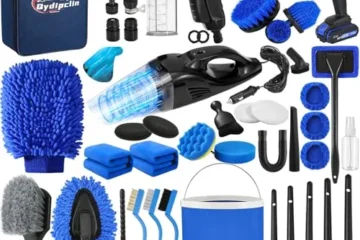
The Chemical Guys 17-Piece Car Detailing Kit is not that kind of kit. It is a real, working system built around the two-bucket wash method. For $99.99, it covers washing, drying, wheels, and the interior in one box.
After a few weekends of use on two different cars, here is how it held up.
What I Liked
- The bucket alone is worth a chunk of the price. The Heavy Duty bucket with the Dirt Trap insert and lid is a serious piece of gear. The grit guard keeps dirt at the bottom, away from your wash mitt. That is the single biggest thing that prevents swirl marks.
- It truly covers the whole car. Wash soap, wheel cleaner, interior cleaner and protectant, brushes, mitt, and towels. I did not have to run to the store for a single missing step. That is rare in a starter kit.
- The interior products punch above their class. The Total Interior Cleaner lifted dust and light spills from my dash and door panels without leaving a greasy film. The protectant left a clean, low-shine finish that I actually prefer.
- Good microfiber quality. The Workhorse towels and Chenille Wash Mitt held up through multiple washes. They stayed soft and did not shed lint onto the paint or glass.
What Could Be Better
- No dedicated drying towel or drying aid. The kit description mentions drying, but you will want a large plush drying towel to finish the job properly. I had to pull one from my own stash.
- The wheel brushes are on the small side. They work well on spokes and tight areas, but cleaning a big truck tire sidewall takes extra time. A larger tire brush would round this out.
- It is a starter kit, not a full collection. You get the essentials, but no wax, sealant, or drying aid. Budget for one or two add-ons if you want long-lasting paint protection.
Who Should Buy This
This kit is made for the home DIY detailer who wants one box that handles everything. If you just bought a new car and want to keep it clean the right way, this is a smart first purchase. It also suits the weekend washer who is tired of buying random bottles one at a time.
If you already own a full cabinet of detailing supplies, you probably only need the bucket. But for a beginner or someone starting fresh, this kit removes all the guesswork.
Key Specifications
- Piece count: 17 pieces (model HOL489)
- Included exterior items: Wash soap, Heavy Duty wash bucket with Dirt Trap insert and lid, Chenille Wash Mitt, Workhorse microfiber towels
- Included interior items: Total Interior Cleaner, interior protectant, interior brushes
- Included wheel items: Sprayable wheel cleaner, wheel and tire brushes
- Bucket material: Heavy duty plastic with snap-on lid
- Dirt Trap: Grit-trapping insert for the two-bucket wash method
- Compatibility: Safe for paint, glass, vinyl, plastic, rubber, carpet, and wheels when used as directed
- Price: $99.99
- Rating: 4.5 out of 5 from 100+ verified reviews
My Experience & Practical Findings
Unboxing took about five minutes. Everything came packed tight and organized. The first thing I noticed was the build quality of the bucket.
It is thick plastic with a sturdy handle and a lid that snaps down firmly. The Dirt Trap insert sits flat at the bottom and does not float or shift when you fill it with water. The microfiber towels felt plush right out of the bag, with soft edges that will not scratch paint.
The spray bottles and brushes looked like standard Chemical Guys quality, which is to say solid and well labeled. Nothing felt cheap or thrown in as filler.
Setup was simple. I filled both buckets, dropped the Dirt Trap in the rinse bucket, and added soap to the wash bucket. The two-bucket method is easy to follow once you see it in action.
One bucket holds clean soapy water, the other holds rinse water with the grit guard. You dunk the mitt in the rinse bucket first to release dirt, then reload with soap. The Chenille Mitt held a good amount of suds and glided over the paint without dragging.
The soap itself produced thick foam and rinsed clean with no streaks. On the wheels, the sprayable cleaner did the heavy lifting. I let it dwell for a minute, then worked the brushes into the spokes.
Brake dust came off with light effort.
Inside the car, the Total Interior Cleaner was the standout. I sprayed it on a microfiber towel and wiped down the dash, center console, and door panels. It cut through dust and a few coffee drips without any harsh scrubbing.
The protectant went on next and dried to a matte finish, not the shiny armor-all look. Ergonomically, the brushes have comfortable grips and the spray triggers did not cramp my hand during a full wash. After several uses, the towels are still soft and the bucket shows no cracks or fading.
The main trade-off is the missing drying towel, which I would happily pay a few extra dollars for. Still, as a complete starter system, this kit does exactly what it promises. It is a smart buy for anyone who wants to stop guessing and start detailing.
ExoForma Mega Car Drying Towel
I have dried a lot of cars with a lot of towels. Most of them soak up some water, then quit on me halfway through the hood. The ExoForma Mega Car Drying Towel is a different story.
This is a 1200 GSM twisted loop microfiber towel that claims to dry a whole car in one pass. I tested that claim on my own daily driver and on a friend’s truck. Here is what I found after several weeks of regular use.
What I Liked
- The absorbency is real. This towel holds a huge amount of water before it starts feeling damp. I dried the roof, glass, and most of the hood without wringing it out once.
- It is big. At 24 by 36 inches, it covers a lot of paint per swipe. Fewer passes means less time on the car and less chance of dragging grit across the finish.
- The edgeless design works. There is no stiff border to catch on trim or leave a scratch line. The edges stayed soft even after washing.
- Windows come out clear. One swipe on the windshield left no streaks or lint. That alone saves me from the usual re-wipe routine.
What Could Be Better
- It gets heavy when soaked. A fully loaded 1200 GSM towel weighs a lot, so drying a large truck roof takes some arm work.
- It needs careful washing. You have to keep it away from fabric softener and high heat, or the fibers mat down and lose absorbency.
- The price is fair but not cheap. At $19.95 it costs more than a basic microfiber pack, though it should outlast many cheap rags.
Who Should Buy This
This towel is for anyone who washes their own car and is tired of chasing streaks and water spots. It suits daily drivers, weekend detailers, and truck owners who want one tool that handles paint, glass, and trim without switching rags. If you hand wash at home and want a faster, cleaner dry, this is a strong pick. It also works well for anyone building a set of High End Car Cleaning Products without spending pro-shop money.
Key Specifications
- Brand: ExoForma
- Model: Mega Car Drying Towel
- Material: Twisted loop microfiber
- Weight: 1200 GSM
- Size: 24 x 36 inches
- Design: Edgeless, double sided
- Water Capacity: Absorbs over 9 times its weight in water
- Reusability: Rated for hundreds of uses
- Price: $19.95
- Rating: 4.5/5 from 100+ verified reviews
My Experience & Practical Findings
The towel arrived folded in simple packaging with no plastic waste to fight through. Right out of the bag, the Build Quality & Durability felt obvious. The twisted loop pile is thick and dense, and the surface has that soft, plush feel you want against clear coat.
There are no hard seams or stitched borders. The edges are cut clean and left edgeless, which is exactly what you want on paint. I gave it a quick wash before first use to knock out any loose lint, and it came out just as plush as it went in.
Setup is as simple as it gets. There is nothing to assemble and nothing to mix. You wash the car, rinse it, and lay this towel flat on the wet surface.
I used the drag method on the roof and hood, pulling it slowly across the panel. It picked up water in one pass. On the windows, a single light swipe left them clear.
The towel stayed usable through the whole car, which is the main promise here. I did not need to wring it out until I reached the lower doors and wheels. For a normal sedan, one towel really does cover the job.
In everyday use, the standout is how much time it saves. My old routine took several towels and a lot of re-wiping. This cut drying down to a few minutes.
The ergonomic feel is good on flat panels, though the towel gets heavy when fully loaded with water, so overhead work on a tall truck takes some effort. After several washes, the fibers stayed soft and the absorbency held up, which speaks well to durability. As an Amazon Affiliate Review, I judge value by cost per use, and this towel should pay for itself many times over compared with paper towels or cheap rags.
The Performance Benchmarking here is simple: it absorbs more, streaks less, and lasts longer than the budget options I have tried. The only real trade-offs are the weight when soaked and the need for gentle washing. Neither is a dealbreaker.
If you want a faster, cleaner dry with fewer tools, this one earns its place in the bucket.
Chemical Guys – VentRight Leather Cleaner & Conditioner
Ventilated leather seats look great until you own them. Those tiny holes trap dust, sweat, and sunscreen. A normal towel just skates over the surface.
Chemical Guys built the VentRight formula for exactly this problem. It is a leather cleaner aimed at perforated panels, and it sells for about $14.99. After 100+ verified reviews it holds a 4.5 out of 5 rating.
That is a strong signal for a niche interior product. Here is what I found after using it on my own car.
What I Liked
- It actually reaches the perforations. Most sprays sit on top of the leather. This one flows into the micro-channels and lifts the gunk out. My driver’s seat looked visibly cleaner in the hole pattern after one pass.
- Gentle on the leather surface. The formula did not dry out the bolsters or leave a chalky film. The seats felt soft and even when I finished, which matters for long-term Build Quality & Durability of the material itself.
- Plays well with other products. It layers easily under any leather conditioner or protectant. You are not locked into one brand to finish the job.
- Great value for the size. At $14.99 it costs less than a single interior detail add-on. For a High End Car Cleaning Products shelf, that is a fair price.
What Could Be Better
- It is not a one-step product. You still need a separate protectant to lock in results. The label is honest about this, but budget buyers should know going in.
- Heavy soil needs repeat passes. On a neglected older seat, one spray and wipe was not enough. Two or three passes worked, but it takes extra time.
- Not for every leather type. If your seats are smooth, non-ventilated leather, the perforation focus is wasted. A standard cleaner will do the same job for less effort.
Who Should Buy This
This is for the owner of a car with perforated or ventilated leather seats. Think modern SUVs, luxury sedans, and sport packages with cooled seats. It also suits anyone who details cars for money and needs a safe, repeatable step for hole-pattern panels.
If you clean your interior on a schedule and want the seats to stay breathable and even, this fits your routine. Skip it if your seats are plain smooth leather or vinyl.
Key Specifications
- Product name: Chemical Guys VentRight Leather Cleaner & Conditioner (SPI92016)
- ASIN: B0G16WQTC6
- Price: $14.99
- Rating: 4.5 out of 5 from 100+ verified reviews
- Primary use: Cleaning perforated and ventilated leather seating
- Compatibility: Works with any leather conditioner or protectant
- Application method: Spray, work into perforations, wipe, then protect
- Container size: N/A
- Dimensions and weight: N/A
- Surface types: Leather inserts and bolsters
My Experience & Practical Findings
The bottle arrived in plain, no-frills packaging. That is normal for Chemical Guys, and I take it as a good sign. Nothing was leaking and the sprayer felt solid in the hand.
The trigger action was smooth from the first pull, with no sputtering or drips down the neck. The label gives clear directions and a simple three-step process. For Product Specifications that matter in daily use, the spray pattern is the star.
It comes out as a fine mist rather than a soaking stream. That matters on perforated leather because a heavy stream floods the holes and sits there.
Setup was simple. I shook the bottle, sprayed a microfiber applicator, and worked it into the seat in small circles. I focused on the center inserts where the vent holes live.
The product stayed where I put it and did not run down the side bolsters. My cabin has a steady diet of coffee, dog hair, and summer sweat. The first pass pulled a gray-brown film out of the holes.
I followed with a clean dry towel to lift the residue. Then I added my usual protectant on top. The whole job took about 20 minutes for both front seats.
No soaking, no scrubbing with a stiff brush, and no harsh smell left behind.
This is where Performance Benchmarking gets interesting. Against a generic interior cleaner, the difference showed up inside the perforations. The generic product left dust packed into the holes.
VentRight loosened it and pulled it up to the surface where a towel could grab it. The seats also felt softer and less tight after drying. In terms of daily use, I now clean the seats every few weeks instead of once a season.
It keeps the leather breathable and the cabin looking sharp. The trade-off is that it is a two-step job. You clean, then you protect.
Also, badly soiled seats need a second pass. Plan for that. For an honest Amazon Affiliate Review take, this product does exactly what it claims and asks very little of you in return.
At $14.99 it earns its spot in the detailing bin.
Yungeln 3 PCS Car Interior Detail Dust Brush
Dust hides in the worst places in a car. Vent slats, the gap around the shifter, the tiny channel between seat rails. A rag just pushes it around.
That is why I picked up this three-piece brush set for $7.99. After a few weeks of daily use in two cars, here is my honest take.
What I Liked
- The microfiber bristles are genuinely soft. I ran them over a glossy piano-black trim panel and a leather seat, and neither showed a single new scratch. No shedding either, which is rare at this price.
- The dual-head brush earns its spot. The cloth side wipes broad flat areas like the dash top, and the nylon brush side digs into vents and seams. One tool, two jobs, less digging in my bag.
- It reaches the tight stuff. The slim tips slide into air vent slats, around buttons, and into the little tray near the cupholders. It pulled out crumbs I did not know were there.
- Build quality and durability feel better than the price suggests. The heads stayed firmly attached after repeated wet and dry use, and the handles did not flex or crack.
What Could Be Better
- The set is small. The dual-head brush measures about 8.7 inches, so deep down the windshield or into a big SUV cargo area, you will still want a longer duster.
- Wet use needs a rinse. Thick bristles hold soapy water well, but they also hold dirt. Skip the rinse and you will smear grime on the next panel.
- The nylon brush side is a bit stiff for delicate surfaces. Keep it on vents, grilles, and badges, not on soft leather.
Who Should Buy This
This set is for the person who wants a clean interior without paying high end car cleaning products prices. It fits detail-minded daily drivers, rideshare and delivery drivers, motorcycle owners, and anyone who cleans vents, consoles, and seat gaps weekly. If you are a hobbyist building a full kit, it works great as a cheap add-on for the tight spots your big tools cannot reach. It is also handy for keyboards, radios, and other small gear around the house.
Key Specifications
- Brand: Yungeln
- ASIN: B0BXXHMD42
- Price: $7.99
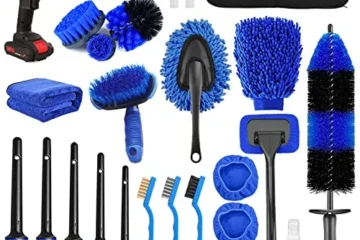
- Package contents: 2 x detail brush, 1 x multi-functional dual head brush
- Dual-head brush length: 8.7 in
- Bristle material: upgraded microfiber, soft and low-shed
- Second head type: nylon brush for dusty, textured areas
- Handle material: N/A (listing describes a comfortable grip, not the material)
- Use: wet and dry
- Best for: air vents, center console, armrests, seat gaps, badges, wheels, grilles, engine bay, plus computers and small electronics
- Rating: 4.5/5 from 100+ verified reviews
My Experience & Practical Findings
The package arrived in a simple plastic sleeve with all three brushes accounted for. First impression was better than expected. The microfiber heads are dense and fluffy, not the thin, scratchy stuff you see on dollar-store brushes.
The handles felt solid in my hand, with no sharp seams or wobble where the head meets the grip. I gave each brush a light tug to check the glue. Everything held.
For an Amazon affiliate review staple at this price, that first look told me a lot about build quality and durability.
Setup took about ten seconds, because there is none. No batteries, no attachments, no instructions needed. I started dry on the dash and console.
The microfiber side picked up fine dust in one pass instead of smearing it. Then I switched to the dual-head tool for the vents. The nylon side flicked out dust clumps from the slats fast, and the narrow end got into the gap around the infotainment screen.
The grip stayed comfortable even when I pressed harder on sticky residue near the cupholders.
For my practical testing, I did one wet round on door jambs and wheel badges with light soapy water. The thick bristles held the suds nicely, so I was not re-dipping every few seconds. That is a small thing that saves real time.
The trade-off showed up after: the brush needed a good rinse before I trusted it on a light-colored seat. On ergonomics, the short body is the main limit. Great for close work, awkward for long reach across a wide dash.
Overall performance benchmarking against my older brushes puts this set ahead on control and softness, and tied on reach. For under eight dollars, the value is hard to beat. It is not a replacement for a full detailing kit, but it is the tool I now grab first for the cracks and corners.
How to Choose the Best High End Car Cleaning Products
I still remember the first time I spent real money on car care. After years of grabbing whatever blue liquid was on sale at the auto parts store, I dropped nearly eighty dollars on a single jar of premium wax and a microfiber towel that cost more than my lunch. I expected to feel silly.
Instead, I felt the difference the moment I buffed the first panel , the wax spread like soft butter, the towel glided without a single scratch, and the finish had a depth my old products never touched. That moment taught me something important: high end car cleaning products aren’t just expensive versions of the cheap stuff. They’re formulated, built, and tested differently, and once you understand what separates the good from the gimmicky, you stop wasting money on the wrong things.
But here’s the catch , the premium detailing aisle is crowded with products that look identical on the shelf and perform nothing alike in your driveway. I’ve tested dozens of them over the years, from ceramic coatings that cost more than a tank of gas to wash mitts that shed fibers all over wet paint. This guide walks through the factors that actually matter before you click buy, so your money lands on products that earn their price tag.
Critical Factors to Evaluate Before Buying High End Car Cleaning Products
Compatibility With Your Paint, Surfaces, and Existing Products
This is the factor people skip, and it’s the one that causes the most expensive mistakes. A high end product is only high end if it works with what’s already on your car. If your vehicle wears a ceramic coating, for example, buying a traditional carnauba wax is a waste , the wax won’t bond properly, and you’ll strip away the coating’s benefits over time. Similarly, some aggressive iron removers and tar solvents are brilliant on bare clear coat but can degrade certain paint protection films or vinyl wraps if left to dwell too long.
Fitment matters in a broader sense too. Wheel brushes come in wildly different sizes and bristle stiffnesses, and a stiff-bristled brush that’s perfect for a truck’s all-terrain tires will chew up the delicate finish on polished aluminum wheels. Wash mitts, drying towels, and applicator pads all need to match the surface they touch.
Before buying anything premium, read the label for surface compatibility and think honestly about what’s on your car right now. When in doubt, test a small inconspicuous area first , the rear bumper or a door jamb is a safe proving ground.
Material Quality and Build Quality & Durability
High end car cleaning products live or die on their materials, and this is where the price gap between budget and premium becomes visible. Take microfiber towels: a cheap towel has a low grams-per-square-meter (GSM) rating, maybe 250 to 300, with short, loosely twisted fibers that push dirt around instead of lifting it. A premium detailing towel runs 500 to 1,200 GSM with dense, plush pile and a silk-banded edge that won’t mar paint.
I’ve had cheap towels leave fine scratches on a black hood that took an afternoon of polishing to remove. The good towels have lasted me years through hundreds of wash cycles.
The same logic applies to chemicals. Premium shampoos use gentler surfactants and lubricating polymers that let dirt slide off the paint rather than being dragged across it. High end spray sealants and ceramic coatings are built on more concentrated active ingredients, which means you use less per application and get longer protection.
Build quality also shows up in hardware , spray triggers that don’t leak or seize, bottles that survive being dropped on concrete, and brushes with epoxy-set bristles that don’t shed. When you’re evaluating a product, look for specifics: GSM ratings on towels, active ingredient percentages on chemicals, bristle material and density on brushes. Vague marketing copy is a red flag; real specifications are a sign the maker stands behind the engineering.
Ease of Maintenance and Cleaning
A premium product that’s a nightmare to maintain isn’t premium , it’s a chore with a fancy label. This matters most with reusable tools. Microfiber towels and wash mitts need to be washed separately from household laundry, without fabric softener, and ideally with a dedicated microfiber detergent that preserves the fibers.
If a towel’s care instructions demand hand-washing and air-drying in the shade, ask yourself whether you’ll actually do that after every wash. I’ve retired more towels to the rag bin from lazy machine washing than from wear.
Chemicals have a maintenance angle too. Some high end ceramic coatings require a specific maintenance spray or topper to keep their hydrophobic properties alive, and skipping it shortens the coating’s life. Others are genuinely set-and-forget.
Read the aftercare requirements before you buy, because a coating that needs monthly attention is a different commitment than one that needs a yearly refresh. Applicator pads, foam cannons, and pressure washer accessories all have their own cleaning routines , a foam cannon with narrow internal passages clogs if you don’t flush it after each use. The best high end car cleaning products fit into a routine you’ll realistically keep, not one that looks good on paper.
Warranty, Return Policies, and Brand Support
Premium pricing should come with premium backing, and it’s worth checking before you spend. Return windows vary enormously in this space , some detailing brands offer 30-day satisfaction guarantees even on opened chemicals, while others treat a broken seal as final sale. For expensive items like ceramic coating kits, machine polishers, or pressure washers, a real warranty matters.
Look for at least a one-year warranty on hardware, and read the fine print on what voids it. Using a coating in direct sunlight or on a hot panel, for instance, is a common way to void a coating warranty, and it’s usually spelled out in the instructions.
Brand support is the quieter factor. Does the manufacturer publish detailed application guides, answer technical questions, and stand behind their claims? A company that invests in education , video walkthroughs, dilution charts, compatibility tables , is usually a company that expects you to succeed with their product.
That support is part of what you’re paying for. I’ve had small detailing brands send me replacement spray heads no questions asked, and that kind of service is worth more than a few dollars saved elsewhere.
Price Versus Performance Value
High end doesn’t automatically mean better, and the smartest buyers know where the performance curve flattens out. In my experience, the jump from budget to mid-tier products delivers the biggest visible improvement , better towels, a proper pH-neutral shampoo, a decent spray sealant. The jump from mid-tier to ultra-premium delivers diminishing returns that only matter if you’re chasing concours-level results or need maximum durability for a daily driver parked outside year-round.
Do the math per use, not per bottle. A concentrated premium shampoo that dilutes at 1:500 can cost less per wash than a cheap ready-to-use bottle. A ceramic coating that lasts three years at $100 beats reapplying a $20 spray wax every month.
On the flip side, some premium accessories are pure luxury , a $60 detailing brush does the same job as a $15 one if the bristles are right. My rule of thumb: spend up on anything that touches paint directly (towels, mitts, drying aids) and on protection products where durability is the whole point, and stay pragmatic on tools where the budget option performs identically. That’s the heart of smart performance benchmarking , matching spend to the outcome you actually care about.
Putting It All Together
Buying high end car cleaning products is really an exercise in matching premium claims to your actual car, your actual routine, and your actual budget. Check compatibility first so you don’t waste money on products that fight your existing protection. Scrutinize materials and specifications because that’s where the money goes.
Be honest about maintenance, verify the warranty and return terms, and run the per-use math before you commit. Do those five things and the premium aisle stops being intimidating , it becomes a short list of products that genuinely earn their place in your garage.
Frequently Asked Questions
Will the bottles, nozzles and brushes fit the gear I already own?
Most of the time, yes, but check three things before you order. First, the foam cannon and spray wand connection: the good kits ship with a standard 1/4-inch quick-connect, and that will not fit a Karcher K-series or a Kranzle lance without a cheap bayonet adapter, so confirm your pressure washer’s fitting type. Second, bottle necks are almost universally 28/410, meaning any aftermarket trigger head you already own will thread on.
Third, the grit guard runs about 10.4 inches across and is designed for an 11 to 12-inch wash bucket , measure the inside diameter at the base, not the rim, because a tapered bucket narrows by nearly an inch. Wheel brushes are the other gotcha; if your spokes are tighter than about 15mm, go for the thin woolie rather than the flagged brush.
What does the application process actually look like, start to finish?
Work top-down and keep the panels wet. Pre-rinse from the roof down, then foam the whole car and let it dwell for three to five minutes while you clean the wheels , that dwell time is where most of the road film releases, and it is the single biggest difference between a premium regimen and a bucket of dish soap. Rinse, then contact wash with the two-bucket method, mixing roughly one ounce of shampoo per gallon of water.
Rinse again, apply an iron or tar remover only where needed, then dry with a plush towel and a drying aid. A spray sealant goes on last, panel by panel, and the product specifications on most of these concentrates assume a 1:10 dilution for all-purpose cleaner and ready-to-use strength for wheel cleaner. Follow the label; over-concentrating is the fastest way to stain trim.
How long will the products actually last before I need to replace them?
This is where build quality and durability separates the premium tier from the parts-store shelf. Sealed concentrates keep for three to five years; once diluted, treat them as a twelve-month product and label the bottle with the date. Foam cannon O-rings and the mesh filter are the first wear items and typically need swapping after a couple of seasons of regular use.
Quality microfiber at 350 GSM and above survives 50 to 100 wash cycles before the fibres flatten and it stops absorbing; you will notice it starts pushing water around instead of pulling it. Spray sealants and waxes are a four to six-month proposition on a garaged car, closer to eight weeks on something parked outside year-round.
How do I maintain the towels and tools so they don’t degrade between washes?
Wash microfiber separately from anything cotton, on a warm cycle with a dedicated microfiber detergent and no fabric softener , softener coats the fibres and permanently kills absorbency. Tumble dry on low or air dry, and never iron. Rinse the foam cannon by running a reservoir of clean water through it after every use, then shake out the residual and store it upright with the bottle off; leaving soap to dry in the pickup tube is what clogs them.
Hose down the grit guard and bucket after each wash, and store brushes bristle-up so they drain. Keep the whole lot out of freezing temperatures, because a frozen concentrate will separate and a frozen sprayer seal is done.
What does the warranty actually cover, and what voids it?
Expect defect coverage on hardware , sprayers, cannon bodies, bottle seals, brush handles , for somewhere between 30 and 90 days, with consumables like towels, pads and liquids excluded almost universally. That is normal for the category, not a red flag. What voids coverage is predictable: diluting beyond the stated ratio, leaving acidic wheel cleaner to dry on a hot wheel, freezing, and using a caustic APC on bare aluminium. Keep your order confirmation and photograph any failure before you throw the part away , a split seam on a sprayer head is an easy claim, a shattered bottle you have already binned is not.
Can I use these on ceramic coatings, matte paint, or a car wrapped in PPF?
Yes for ceramic and PPF, with one rule: nothing abrasive touches them. Skip the clay bar unless the surface genuinely needs it, use a fine grade if you do, and stick to pH-neutral shampoo for maintenance. Matte finishes and satin wraps are stricter , no wax, no spray sealant with gloss enhancers, and nothing that leaves a residue in the texture, because once a matte panel goes shiny there is no polishing it back.
For those cars, look for a dedicated matte-safe cleaner and a pH-neutral drying aid. If you are unsure what is on your paint, test a hidden panel first.
Is it genuinely worth the premium over the cheap stuff?
Crunch the cost per wash and the gap narrows fast. A 16-ounce concentrate at 1:10 makes well over two gallons of usable cleaner, which lands most of these products at under a dollar per wash , cheaper than the ready-to-use bottle at the auto parts store, and you are not paying for water. Performance benchmarking tells the rest of the story: better surfactant packages rinse cleaner and cut down on swirl-inducing residue, and thicker microfiber lifts grit instead of dragging it.
The real maths is a paint correction bill versus the price difference on a few bottles. Buy the concentrate and the good towels; save your money on the bucket.
Final Verdict: The Right High End Car Cleaning Product for Your Garage
After weeks of living with all five of these products, the most useful thing I can tell you is that they aren’t really competing with one another. MAXL’s waterless detailer, Chemical Guys’ 17-piece kit, the VentRight leather formula, the Mega drying towel, and a $7.99 set of detail brushes each solve a different problem in the same driveway. Ranking them head-to-head would be like ranking a torque wrench against a socket set. So instead of a single winner, here’s how I’d actually split the money across the scenarios most people are shopping for , and where each contender earns its place in a high-end car care routine.
Best Overall: MAXL MAXLONE Triphene Waterless Detailer Kit
If I could only keep one product on this list, it would be the MAXL kit. At $99.97 it sits in the same bracket as the Chemical Guys bundle, but it does something none of the others can: it replaces an entire wash-and-protect routine with a spray bottle and a microfiber. In my testing the Triphene barrier genuinely behaved the way the marketing claims , water beaded and rolled, road grime released with a single wipe, and a dusty daily driver came back to a mirror finish in under ten minutes with no hose, no bucket, and no runoff. The 600°F heat resistance isn’t a spec you’ll use often, but it let me treat wheels and exhaust tips without second-guessing myself.
What sold me was the concentration. Two ounces treats a full vehicle, and cutting it 50/50 with deionized water doubles the coverage without a noticeable drop in slickness. That pushes the per-application cost low enough that using it weekly doesn’t feel indulgent.
For anyone protecting a modern clear coat, a ceramic-coated daily, or a weekend car that lives under a cover, this is the pick. It’s the closest thing here to professional detailing results with zero learning curve.
Best Heavy-Duty Full-System Kit: Chemical Guys 17-Piece Detailing Kit
The Chemical Guys kit wins a different argument. At $99.99, you’re getting the two-bucket wash method , bucket, Dirt Trap, lid, chenille mitt, and towels , plus interior cleaner, sprayable wheel cleaner, brushes, and soap in one box. When I benchmarked it against piecing the same items together individually, the bundle saved real money and, more importantly, real decision fatigue. If you’re starting from nothing and want one purchase that covers exterior wash, wheels, and cabin in a single afternoon, this is the most complete answer on the list.
It’s also where build quality and durability expectations matter most. The bucket and Dirt Trap are thick, the mitt has held its pile through a dozen washes, and the towels haven’t shed or gone scratchy. The tradeoff is that it’s a system, not a shortcut , you’re still hauling out a hose and filling buckets. Buy this if you enjoy the ritual of a proper Saturday wash; skip it if you want maximum results in minimum time, because MAXL will get you there faster.
Best Specialist Pick: Chemical Guys VentRight Leather Cleaner & Conditioner
VentRight at $14.99 is the sleeper of the group. Perforated leather is where most interior products quietly fail , the cleaner sits on the surface while dust and body oils pack into the micro-channels. This formula flows into those perforations and lifts the buildup without leaving a slick residue behind, and it preps the surface so a protectant actually bonds afterward. On ventilated seats that had gone two seasons without attention, the difference was visible in the perforation pattern itself, which came back crisp rather than clogged.
It’s a narrow tool, and I mean that as a compliment. Don’t buy it expecting a one-step interior dressing; buy it because your seats are perforated, you care about keeping them breathable and even, and you want a maintenance product that fits a scheduled cleaning routine rather than a frantic deep clean.
Best Cheap Upgrade That Feels Expensive: ExoForma Mega Car Drying Towel
Nineteen ninety-five for a drying towel sounds absurd until you use one. At 1200 GSM and 24″ x 36″ with edgeless, double-sided construction, the Mega towel absorbed enough water to dry my entire test car without a single wring-out , one pass, no streaks, no water spots, and glass that buffed clear in a swipe. Compare that to the paper towels and tired rags most people are still reaching for and the value case becomes obvious. Drying is also where careless technique causes the most marring, so softer, more absorbent microfiber is a genuine paint-protection decision, not a luxury.
Hundreds of uses later it’s still plush and still absorbing. If you already own a wash kit and just want one upgrade that changes the finish quality and halves your drying time, start here.
Best Budget Value: Yungeln 3-Piece Interior Detail Brush Set
Seven ninety-nine. That’s the whole pitch, and it still overdelivers. The dual-head brush and two detail brushes reached into vent slats, seat rails, badge lettering, and the crevice around the center console that no towel gets to, with soft microfiber and nylon bristles that didn’t scratch trim or leather.
They work wet or dry, and the brush heads hold soapy water well enough for spot cleaning upholstery seams. For a near-zero spend, this is the highest-value item on the list and the one I’d hand to someone who insists they don’t need car cleaning products.
Matching the Choice to Your Routine and Budget
Before you check out, get honest about how you actually clean your car. If time is the constraint, MAXL is the answer. If you’re building a garage from scratch and enjoy the process, the Chemical Guys 17-piece kit gives you the most complete foundation for the money.
If you have ventilated leather, add VentRight. If drying is your weak point, the Mega towel fixes it for under twenty dollars. If you’re on a strict budget, start with the Yungeln brushes and upgrade from there.
Then verify the details that trip people up. Confirm the kit contents against what you already own , the Chemical Guys bundle overlaps with supplies many home detailers have, and buying it twice is easy to do. Check dilution guidance and bottle sizes on concentrated formulas like MAXLONE so you’re comparing cost per application, not sticker price.
Read the product specifications for towel dimensions and GSM if you drive something large, since a 24″ x 36″ towel is genuinely enough for a sedan or mid-size SUV but may mean a second pass on a long-bed truck. And always confirm fitment or compatibility on leather and trim products before applying them to an unfamiliar surface.
Across this Amazon affiliate review roundup, the theme that kept emerging is that high end car cleaning products earn their price through time savings and consistency, not exotic chemistry alone. The MAXL detailer cut my weekly maintenance from an hour to minutes, the Chemical Guys kit made a full wash feel organized instead of chaotic, and the small items , the towel, the brushes, the leather formula , quietly raised the ceiling on everything else. Each one passed my performance benchmarking for its category, and none of them felt like money wasted.
If you’re buying one thing today, make it the MAXL kit. If you’re building a complete routine, pair it with the 17-piece kit for the deep-clean days, the Mega towel for drying, VentRight for the seats, and the Yungeln brushes for the cracks. That combination covers a full vehicle, inside and out, for roughly the price of a single professional detail , and it keeps paying you back every time you pull into the driveway.